Let's Talk Politics.

Register To Vote Online
Register To Vote Online
https://www.vote.nyc/page/register-vote
You may also obtain Registration Forms from libraries, post offices, and most New York City government agencies, or ask us to send you an application in the mail. Call 1-866-VOTE-NYC (1-866-868-3692) or email your mailing address to vote@boe.nyc.ny.us with the name of your borough in the subject line.
Election Calendar
https://elections.ny.gov/political-calendars
Restoration of Voting Rights for Felons
It has been common practice in the United States to make felons ineligible to vote, in some cases permanently. Over the last few decades, the general trend has been toward reinstating the right to vote at some point, although this is a state-by-state policy choice. (See “Recent State Actions” below for a chronology.)
Currently, state approaches to felon disenfranchisement vary tremendously. NCSL has divided states into four categories, as detailed in Table 1 below.
In all cases, “automatic restoration” does not mean voter registration is automatic. Typically, prison officials automatically inform election officials that an individual’s rights have been restored. The person is then responsible for re-registering through normal processes. Some states, such as California, require voter registration information be provided to formerly incarcerated people.
In summary:
- In the District of Columbia, Maine and Vermont, felons never lose their right to vote, even while they are incarcerated.
- In 23 states, felons lose their voting rights only while incarcerated, and receive automatic restoration upon release. Note that in Maryland, convictions for buying or selling votes can only be restored through pardon.
- In 15 states, felons lose their voting rights during incarceration, and for a period of time after, typically while on parole and/or probation. Voting rights are automatically restored after this time period. Former felons may also have to pay any outstanding fines, fees or restitution before their rights are restored.
- In 10 states, felons lose their voting rights indefinitely for some crimes, or require a governor’s pardon for voting rights to be restored, face an additional waiting period after completion of sentence (including parole and probation) or require additional action before voting rights can be restored. These states are listed in the fourth category on Table 1. Details on these states are found in Table 2 below. (click on the link https://www.ncsl.org/elections-and-campaigns/felon-voting-rights )
Key Dates For 2026
Elections in New York are scheduled to take place throughout 2026. The general election is scheduled for November 3, 2026.
Federal elections
No special elections to the United States Congress are scheduled to take place as of August 10, 2025.
The 2026 United States House of Representatives elections in New York will be held on November 3, 2026.
State elections
Elections will be held for governor, attorney general, comptroller, United States House of Representatives, state senate, and State Assembly.
Municipal elections
Per the “Even Year Law,” most local elections across New York will be held on November 3, 2026.[2]

Mayor Mamdani Leads More Than 100 Elected Officials in Calling on Parking Garage Owners and Operators to Keep ICE Off Their Property
One week after ICE agents shot a father in Marble Hill while reportedly staging operations from a nearby private parking lot, Mayor and allied electeds urge garage and lot owners across the five boroughs to deny ICE access
NEW YORK – Mayor Zohran Kwame Mamdani led more than 100 elected officials from across New York State in calling on every parking garage and lot owner in New York City to deny U.S. Immigration and Customs Enforcement (ICE) the use of their property as a staging ground for anti-immigrant operations.
In a letter sent today, the mayor and elected officials urge more than a thousand owners and operators not to rent, lend or otherwise make their property available to ICE for their operations. They also call on property owners to tell the agency directly that it is not authorized to use their facilities.
The call comes one week after ICE agents surrounded a car on a crowded residential street in Marble Hill and fired multiple rounds at 28-year-old Oscar Belgal, striking him in the neck while his 5-year-old son also sat in the vehicle. The agents had reportedly been staging operations from a private parking lot a few blocks away. The incident is not isolated, for example, ICE has also operated out of two bank parking lots on Northern Boulevard in Queens and a garage on Morton Street in Manhattan.
“Last week, ICE agents shot a father in the neck in Marble Hill while his 5-year-old son sat in the car,” said Mayor Mamdani. “City law already bars ICE from using City property as a base of operations. Federal agents are turning to private parking lots, including a lot just blocks from where they shot Mr. Belgal. I am asking every garage and lot owner in this city to stop giving them that option. Do not rent your property to ICE. Do not lend it to them. Tell them they are not welcome. More than 100 elected officials from across New York are standing with me to make that request. We know this kind of action can already make a difference: After neighbors spoke up, a garage on Morton Street removed ICE vehicles from its property. Every owner has the power to do the same. Our neighbors should not live in fear that the parking lot down the block could become a staging ground for an operation that puts their communities at risk.”
More than 3.1 million New Yorkers — over one-third of the city’s population — were born outside the United States. Immigrants make up 43% of the city’s workforce, powering the restaurants, shops, construction sites, hospitals and small businesses that keep New York running.
When immigrant New Yorkers are afraid to drive to work, run errands or go about their daily lives, the consequences reach far beyond individual families. They affect neighborhoods, small businesses and the city’s economy as a whole. Parking owners have a choice: They can help their neighbors feel safe in their own communities, or they can provide ICE agents with a place to stage their anti-immigrant operations. The Mamdani administration is enforcing and abiding by State and City laws and policies that limit the use of City property to official City purposes. These protections cover City-owned parking garages and lots, as well as schools, shelters and hospitals. Absent a judicial warrant or a limited legal exception, non-City law enforcement may not use City property as a staging area, processing location or base of operations.
In February, Mayor Mamdani issued Executive Order 13 which sought to strengthen protections on how City agencies interact with federal immigration authorities, including updating protocols on access to City property and lots. Following the EO 13 audit completed in May, the City issued updated guidance on this issue. But those protections do not extend to private property. That is why the mayor and more than 100 elected officials are now calling directly on the people who own and operate parking facilities across the five boroughs to keep ICE off their property.
“ICE continues to escalate its attacks on our communities, resulting in immigrant New Yorkers living under constant threat and making our city less safe,” said MOIA Commissioner Faiza N. Ali. “While our city’s local laws prohibit the use of City-owned properties and lots for federal civil immigration enforcement, including ICE staging, we urge private property owners to do their part to protect immigrant New Yorkers. This is an important step to defend immigrant communities and build a city where every New Yorker can live without fear in the city they call home.”
New Yorkers seeking immigration legal assistance can call the MOIA Immigration Legal Support Hotline at 800-354-0365.
The full letter is available here.
With Three Weeks Until Election Day, Commission on Government Efficiency Launches “Vote on Faster Government” TV & Digital Ad
“Vote on Faster Government” PSAs will help ensure New Yorkers know about Props 1-5 this November
NEW YORK — The Commission on Government Efficiency (COGE), the 2026 New York City Charter Revision Commission convened by Mayor Zohran Kwame Mamdani, today launched a new TV and digital ad as part of the “Vote on Faster Government” public education campaign to inform New Yorkers about this November’s five ballot proposals. The ad will run now through the General Election on November 3 and is part of COGE’s public education campaign. In addition to ads, the public education campaign includes an online information hub available at nyc.gov/fast, engagement with community leaders and educational materials distributed directly and through digital outreach.
“We know New Yorkers are not afraid to make their voices heard — whether they are cheering for the Knicks, ordering from the bodega or voting at the ballot box,” said Mayor Mamdani. “From small business owners facing bureaucratic mazes, to affordable housing developers frustrated with delays and multiple approvals, the same New Yorkers who informed the Commission on Government Efficiency’s proposals will now decide whether they become reality. That is why ‘Vote on Faster Government’ is giving New Yorkers the tools to make an informed decision at the ballot box in November.”
“No one should be surprised at the ballot box,” said Ann Cheng, Executive Director of the Commission on Government Efficiency. “We want every New Yorker to know that there is an election November 3, the deadline to register to vote is October 24, there are five proposals on the ballot, and they can learn more at nyc.gov/fast. The ‘Vote on Faster Government’ public education campaign aims to get the word out now so that New Yorkers have time to research the proposals and decide how they want to vote.”
“New Yorkers have been in the driver’s seat of the COGE process since the beginning, and this public awareness campaign will ensure that they remain in the driver’s seat through the election,” said Patrick Gaspard, Chair of the Commission on Government Efficiency. “The ‘Vote on Faster Government’ PSA will remind New Yorkers to Vote on November 4 — not just on who will represent them, but also on how efficiently government should work. Each of the five ballot proposals came from the ideas of New Yorkers, and it is New Yorkers who will ultimately decide their outcome.”
Launched on September 15, the Vote on Faster Government campaign is reaching New York City voters through:
- An online information and resource hub, available at nyc.gov/fast
- PSAs and digital advertising, including efforts in ASL
- Briefings with community leaders and critical stakeholders, including New Yorkers who participated in public hearings
- Digital engagement and mobilization efforts to sign New Yorkers up to vote
- Canvassing
New Yorkers can access palm cards and educational materials in 15 languages on nyc.gov/fast:
- English: Palm Card, Flyer, Lobby Slide
- Arabic: Palm Card, Flyer, Lobby Slide
- Bengali: Palm Card, Flyer, Lobby Slide
- French: Palm Card, Flyer, Lobby Slide
- Haitian Creole: Palm Card, Flyer, Lobby Slide
- Italian: Palm Card, Flyer, Lobby Slide
- Korean: Palm Card, Flyer, Lobby Slide
- Polish: Palm Card, Flyer, Lobby Slide
- Russian: Palm Card, Flyer, Lobby Slide
- Chinese (Simplified): Palm Card, Flyer, Lobby Slide
- Spanish: Palm Card, Flyer, Lobby Slide
- Filipino: Palm Card, Flyer, Lobby Slide
- Chinese (Traditional): Palm Card, Flyer, Lobby Slide
- Urdu: Palm Card, Flyer, Lobby Slide
- Yiddish: Palm Card, Flyer, Lobby Slide
The Five Ballot Proposals
In July, following 10 public hearings, COGE voted to advance ballot proposals to New York City voters.
Election Results
by Elijah Snyder
North Bronx Voters Weigh in During June 23rd Democratic Primary.
Voters in Co-op City and the North Bronx headed to the polls on June 23 for the Democratic primary, where incumbent candidates in State Senate, State Assembly, and U.S. House races largely secured renomination, setting the stage for the November general election.
The results largely reinforce the existing political leadership in the region, with most sitting officials maintaining their nominations. In areas that lean left, such as the North Bronx, Democratic nominees tend to have a significant advantage in the general election. Thus, the results from this past Tuesday will likely carry over into November, shaping ongoing representation in Albany and Washington.
In almost all elections representing the North Bronx, voters cast ballots for long-standing incumbents. The results of these contests will determine who advances to the general election, where they will be heavily favored.
House Race
Ritchie Torres secured the Democratic nomination for New York’s 15th Congressional District, defeating challenger Michael Blake. The incumbent, Torres, maintained a strong lead throughout, bolstered by a variety of endorsements and a significant fundraising advantage. Preliminary results reported by the New York Times show that Torres won by approximately 50 percentage points.
The results reflect the strength of incumbency in the borough. While some other districts saw incumbents like Dan Goldman and Adriano Espillat ousted in favor of more progressive candidates, District 15 followed a more traditional pattern, favoring the sitting official.
State Senate
Jamaal Bailey:
Jamaal Bailey represents New York’s 36th State Senate District, covering the Bronx neighborhoods of Woodlawn, Williamsbridge, Co-op City, Wakefield, Baychester and the Westchester city of Mount Vernon.
In the most recent Democratic primary, Bailey won his party’s nomination for the third straight time, maintaining his position as the district’s incumbent. His campaign focused on issues including criminal justice reform, police reform, and equitable insurance coverage, areas he emphasized during his previous terms.
Gustavo Rivera:
Senator Gustavo Rivera represents New York’s 33rd State Senate District, comprising Fordham, Belmont, Riverdale, Kingsbridge Heights, Norwood, Bedford Park, Pelham Parkway, Van Nest, Morris Park, and parts of Allerton.
Rivera, chair of the Senate Health Committee, acquired the Democratic nomination in the June 23 primary. Throughout his campaign and tenure, he has prioritized expanding access to healthcare, reducing medical debt, strengthening patient protections, preventing opioid overdoses, establishing hospital staffing standards, advancing affordable housing, and improving mental health services.
State Assembly:
Like the state senate primaries, the state assembly primaries also favored incumbents, with Carl Heastie and Michael Benedetto both maintaining their seats.
Carl Heastie:
Carl Heastie represents Assembly District 83, covering Co-Op City, Baychester, Edenwald, Eastchester, Wakefield, Williamsbridge, and Woodlawn.
Like many of his fellow incumbents, Heastie also secured renomination from the Democratic Party. According to his official platform, Heastie’s priorities as Assembly Speaker include addressing affordable housing, education, public safety, economic opportunity, and healthcare. As Speaker of the New York State Assembly, Heastie plays a leading role in determining the body’s agenda.
Michael Benedetto:
Michael Benedetto has represented District 82 since 2005, and it looks like he’ll be serving for at least another term. The neighborhoods of Co-op City, Throggs Neck, Pelham Bay, Westchester Square, Country Club, and City Island are all under his jurisdiction.
Benedetto, an experienced educator, secured nomination after facing Jake Kuhl and Felix Omozusi. His priorities as chair of the education committee include Education, Special education, Veterans’ affairs, Public Safety, Quality of Life in East Bronx, and support for parks and community projects With the primary concluded, the winning candidates will advance to the November general election. For voters in the North Bronx, the results indicate that representation in Albany and Washington will likely remain unchanged following November.
2025 is a citywide election year, which means New Yorkers belonging to a party will be heading to the polls in June to choose (and rank) candidates for local offices.
Citywide offices on the ballot
Mayor
City Comptroller
Public Advocate
Borough President
City Council
Additional offices that may appear on your ballot
Delegate to Judicial Convention
Alternate Delegate to the Judicial Convention
District Attorney (Manhattan)
Judge of Civil Court
Surrogate
Male District Leader
Female District Leader
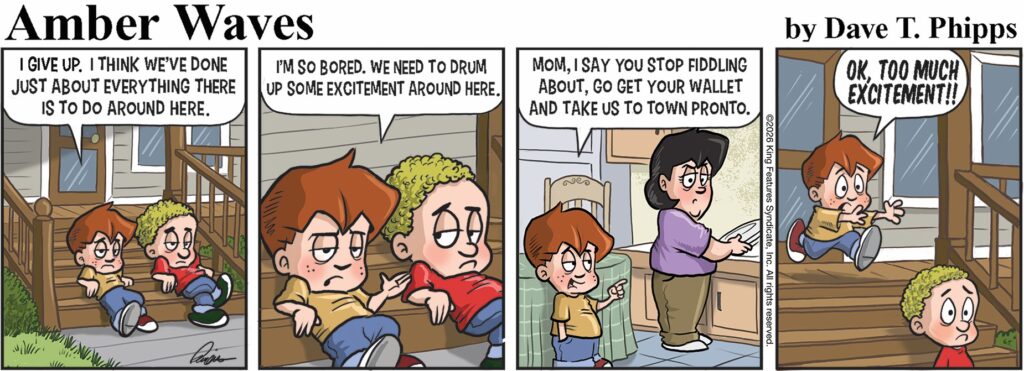
This is a Ranked Choice Voting election
NYC uses Ranked Choice Voting in primary and special elections for city offices. You can rank 5 candidates in order of preference instead of choosing just 1!
On National Voter Registration Day, Commission on Government Efficiency Launches Public Education Campaign on Ballot Props 1-5
“Vote on Faster Government” PSAs and information hub will help ensure New Yorkers know about props 1-5 this November
NEW YORK – The Commission on Government Efficiency (COGE), the 2026 New York City Charter Revision Commission convened by Mayor Zohran Kwame Mamdani, today launched “Vote on Faster Government,” a public education campaign to inform New Yorkers about the five ballot proposals that will appear on the November ballot.
The campaign includes a public education video and online information hub (nyc.gov/fast), with citywide PSAs launching next month. COGE will also hold briefings with stakeholders, engage community leaders through speaking engagements and roundtables, distribute educational materials directly to voters and use digital outreach to encourage New Yorkers to make their voices heard at the ballot box.
“More than 1,000 New Yorkers participated in public hearings this summer, sharing ideas not just about what government does but about how it does it,” said Ann Cheng, Executive Director of the Commission on Government Efficiency. “The Vote on Faster Government campaign brings this work back to where it started: with New Yorkers and their ideas for a more efficient government. In the weeks ahead, COGE will work tirelessly to ensure New Yorkers know what these five proposals would do long before they enter the voting booth.”
“Whether you bike to work, own a small business or rely on non-profit services, these ballot proposals are about making sure City government works more efficiently for you,” said Patrick Gaspard, Chair of the Commission on Government Efficiency. “New Yorkers have been at the very center of this process from the beginning. We listened to their experiences, brought their ideas together, and advanced five ballot proposals. Now it’s up to voters to decide. Until then, our job is to make sure every voter has what they need to make an informed choice.”
Starting September 15, the Vote on Faster Government campaign will reach New York City voters through:
- An online information and resource hub
- PSAs and digital advertising
- Briefings with community leaders and critical stakeholders, including New Yorkers who participated in public hearings
- Digital engagement and mobilization efforts
- Direct grassroots outreach and canvassing
- Palm cards and educational materials in 13 languages
The Five Ballot Proposals
In July, following 10 public hearings, COGE voted to advance ballot proposals to New York City voters.
Question 1 saves small businesses time and money by making it easier to open outdoor dining and build accessible ramps.
- Cuts the outdoor dining application process by 75%, from eight months to two months
- Saves small businesses up to $1,800 in application costs and thousands of dollars in staff time
- Speeds up the approval process for accessible entrance ramps and lifts by two months
Question 2 speeds up City contracting so small businesses and nonprofits can deliver services more quickly.
- Reduces administrative burdens on small businesses and nonprofits that contract with the City
- Saves City contractors like small businesses and nonprofits up to 30 days in the contracting process
Question 3 fast-tracks street safety projects and generates revenue from surplus City property.
- Speeds up street safety projects, including bike lanes, by at least 33%
- Unlocks more than $200 million in potential City revenue through the sale of small surplus lots and unused air rights over City-owned landmarks
Question 4 simplifies construction permitting to speed up housing.
- Brings 40 approvals from 18 separate offices and agencies into one place, saving builders time and frustration
Question 5 sets a rainy-day savings target to strengthen the City’s long-term fiscal stability
- Establishes a savings target of 12% of total tax revenue to help strengthen the City’s financial position over the long term
“This November, New Yorkers have the opportunity to vote on five ballot provisions that will impact how our city operates and serves communities like those we represent. With so much at stake, it is crucial that voters have the resources they need to make informed decisions.” said Rich Maroko, President of the Hotel and Gaming Trades Council (HTC). “That’s why we’re grateful for COGE’s commitment to an extensive outreach campaign so New Yorkers can understand the importance of these proposals and make their voices heard at the ballot box.”
“While some states and municipalities undermine the right to vote, New York City is championing it through COGE’s new ‘Vote on Faster Government’ public education campaign,” said Manny Pastreich, President, 32BJ SEIU. “Civic engagement is essential to a thriving New York City. COGE’s new civic education initiatives will help make sure New Yorkers know the essential role they play in our democracy and how to make their voices heard in making government work better.”
“As the former Executive Director of the Department of Education’s Students in Temporary Housing office, I’ve seen city government at its best, and at its most challenged, especially when it comes to serving the New Yorkers who need it most,” said Michael Hickey, Chief of Strategy and Operations for CitizensNYC. “The ‘Vote on Faster Government’ campaign kicking off today gives every New Yorker a chance to enter the ballot booth better informed, so they can decide for themselves what’s best for their families, their businesses, their communities, and their lives.”
“COGE is continuing to improve the government’s ability to serve all New Yorkers with the launch of this public education resource, which provides voters with high quality and accessible information about the November ballot propositions. Such initiatives are essential for healthy civic engagement,” said Emily Eisner, Acting Executive Director and Chief Economist at the Fiscal Policy Institute. “This campaign represents a small but significant effort on the part of the City’s Charter Commission to improve the functioning of City Hall and the services provided to New Yorkers.”
“The Commission on Government Efficiency has done tremendous work hearing from New Yorkers about cumbersome government processes, identifying where modifications to the city’s charter can meaningfully improve them, and educating New Yorkers on how they can have a voice and a vote on these issues,” said Catherine Vaughan, Co-Executive Director of Abundance New York. “We appreciate COGE’s work to educate and inform voters about what’s on the ballot, how it influences the working of government, and why it matters to their day-to-day lives.”
“Our city is better off when more New Yorkers are engaged in civic life, and that includes at the ballot box,” said Susan Stamler, Executive Director, United Neighborhood Houses. “Throughout our history, settlement houses have believed that voter education and inspiration are essential parts of our democracy. We thank COGE for undertaking this work and for recognizing that education and outreach with community partners will only make our city stronger.”
“Urban Design Forum believes that an informed and engaged public makes good urban planning possible in every corner of the city,” said Guillermo Gómez, Director of Programs at Urban Design Forum. “We commend COGE for investing in this kind of civic education to ensure every voter can make their voice heard this November.”
2026 Election Results For the Bronx

https://voterlookup.elections.ny.gov/
Trivia
BYLINE: By Fifi Rodriguez
—
1. LITERATURE: Who wrote the novel “The Invisible Man”?
2. GEOGRAPHY: In which country is the Topkapi Palace located?
3. ASTRONOMY: How long is a year on the planet Mars?
4. MOVIES: What is the name of the sea witch in the animated film “The Little Mermaid”?
5. ANATOMY: What is the average lifespan of a red blood cell?
6. MATH: What is the Arabic equivalent of the Roman numerals MMI?
7. GENERAL KNOWLEDGE: What are the three secondary colors in traditional color theory?
8. TELEVISION: Which TV sitcom features the Bluth family?
9. ANIMAL KINGDOM: What is a group of jellyfish commonly called?
10. GAMES: How many squares are on a checkerboard?
Trivia answers
1. H.G. Wells.
2. Istanbul, Turkey.
3. 687 Earth days.
4. Ursula.
5. 120 days.
6. 2,001.
7. Orange, green and purple.
8. “Arrested Development.”
9. A smack.
10. 64.